

Description
djirrirra wununmurra
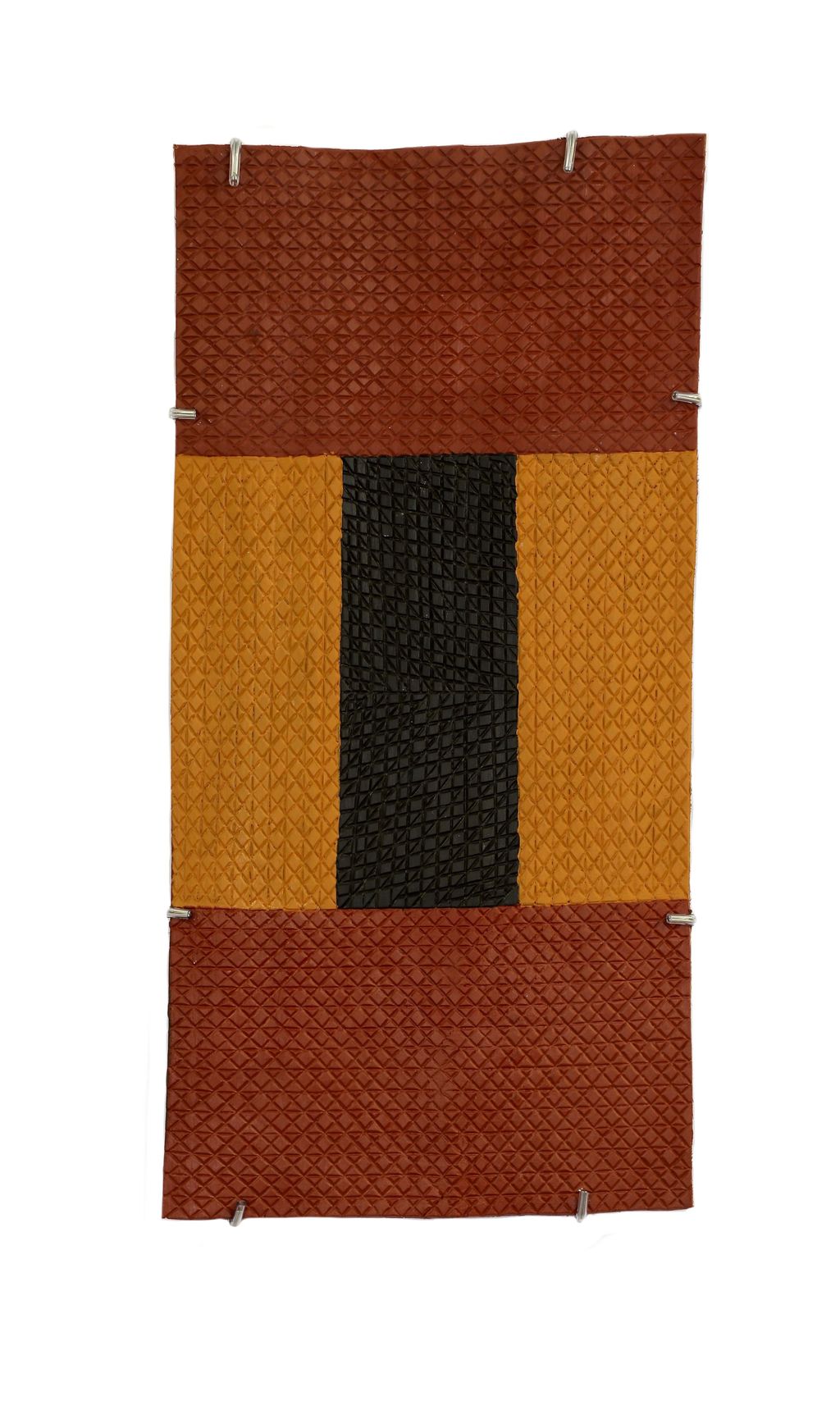
Earth pigments on Stringybark
57.5 x 28.5cm
Year: 2022
ID: 2759-22
Buyku
Late 2006 saw the first incised bark painting come into Buku-Larrnggay. It was by Guynbi. During the course of 2007 he produced perhaps 3 more, one of some real significance that was shown at Annandale’s Young Guns 2 exhibition. In 2008, as a finalist to exhibit at the Xtrata Coal Emerging Indigenous Artist he produced his Xtrata show that consisted of 2 grand incised bark paintings and 3 incised hollow logs. He won that prize.
Djirrirra is a close neighbour of his at the tiny homeland of Gangan. In early 2011 she began to bring in works of such intense fine detail and then incised that it marked a clear departure from her earlier works. One of these works went to the Telstra Award and was acquired by the Queensland Art Gallery. She moved on to other genre including the Yukuwa theme and tonal backgrounds as well as found materials.
But early in the bark season of 2015 she began again to incise. Artworks of this nature have multiple layers of metaphor and meaning which give lessons about the connections between an individual and specific pieces of country (both land and sea), as well as the connections between various clans but also explaining the forces that act upon and within the environment and the mechanics of a spirit’s path through existence. The knowledge referred to by this imagery deepens in complexity and secrecy as a person progresses through a life long learning process.
A sacred expanse of water behind the Gangan outstation where this work was produced is referred to as Gulutji. The initial activities of Barama the great Ancestral Being for the Yirritja moiety took place here. From travelling from the seaside at Blue Mud Bay he emerged from the waters of Gulutji. Council was held with ‘Disciple’ Ancestors and Yirritja Law was ‘written’. From this place the Yirritja (the Yirritja moiety together with the Dhuwa moiety forms a duality system that keeps all past, present and future life in balance) nation spread as it traversed its country establishing clan estates and governing policy including language, ceremonial ritual and miny’tji (signature of sacred design of event and place- this word describes the patterns employed in this work).
One of the metaphorical overviews of the work is the union between the different subgroups of the Dhalwangu clan in the ancestral cycle of regular fishtrap ceremonies they join together in celebrating. The last one of these was five years ago. These gatherings are ceremonial but also social and educational.
The sacred diamond design generally refers to the waters around Gangan but here are encased in a strong grid of vertical and horizontal lines which show the structure of the fishtrap made during Mirrawarr (early Dry Season) with Rangan (paperbark) and wooden stakes. This is the Buyku or fishtrap area which is ‘company’ land (ie. shared by all the people who live by/sing the river). The Dhalwangu and allied groups who participate in this song cycle and fishing activity are hunting Baypinga (Saratoga) as does the Gany’tjurr (Reef Heron) which they identify with as the archetypal Yirritja hunter.
Reviews
There are no reviews yet.