Description
Artist Name: Birrpunu #2 Yunupiŋu
Medium: Earth pigments on wood, with sterling silver
Carving dimensions: approximately 15.5cm tall x 2cm wide
Description
Girriŋgirriŋ is the Yolŋu word for gunga, seed or shell made jewellery, necklace or ornament.
Common materials used as beads are the seeds from plants such as Gum Tree (Eucalyptus), Rattlepod (Crotalaria), Red Bead Tree (Adenanthera pavonina), Sicklepod (Senna obtusifolia), Ŋaraka (fish vertebrae) from Parrotfish, Kingfish, small Mäna (sharks) and stingray, and seashells. Gapan (white clay) and natural earth pigments are sometimes used to paint the beads.
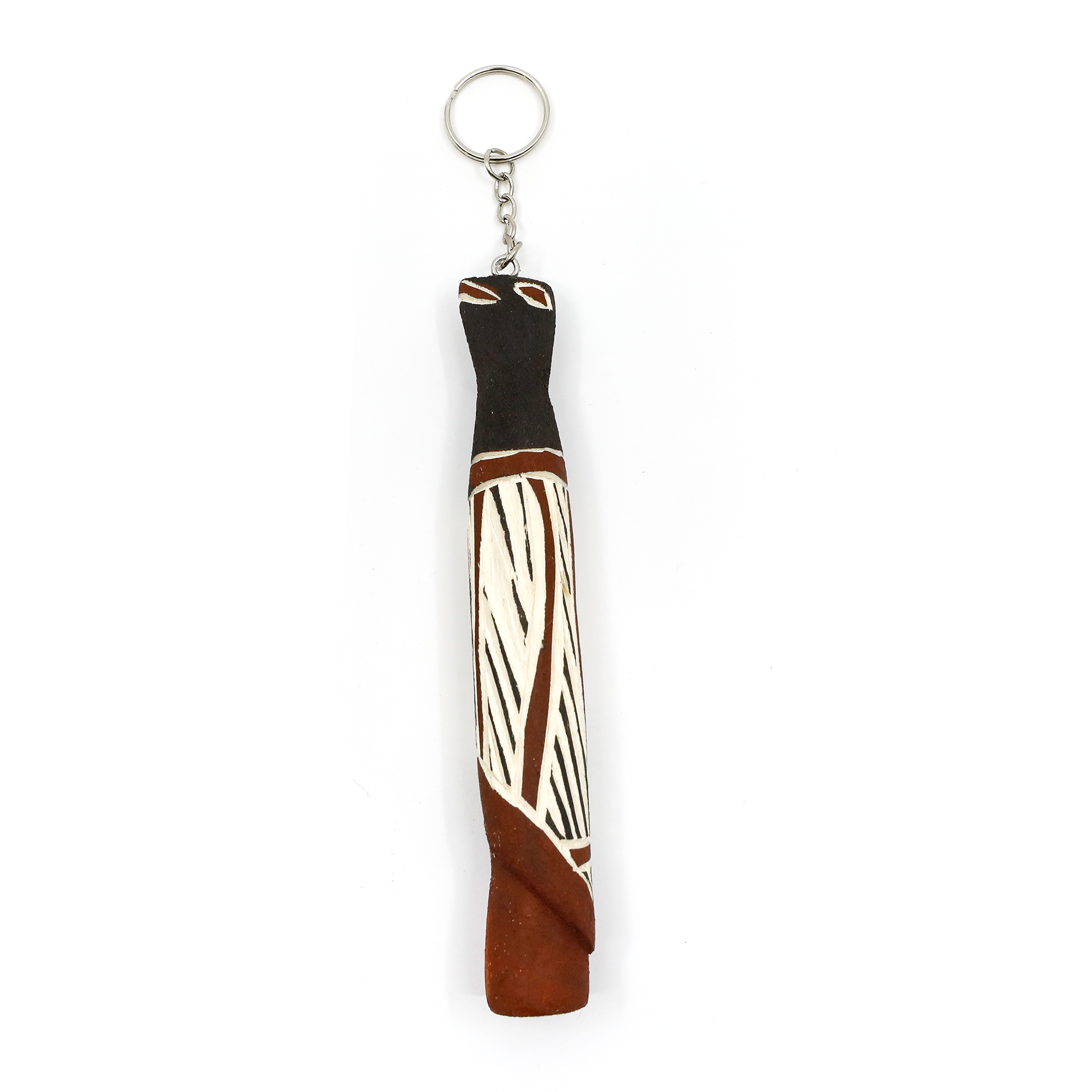
Some pieces, like this one, are made from renewable wood which is usually harvested from the tree in the dry season. Preferred woods are Maḻwan (Hibiscus Tiliaceus), Gunhirr (Blind-Your-Eye-Mangrove), Wuḏuku (mangrove wood), Barraṯa (Kapok). The first activity is to enter the monsoon vine thicket and cut the wood and carry it back to the vehicle. Often a long hike through prickly vines and scrub. the wood is skinned and left to dry for a short period. It is then shaped by knife or axe. After the surface is sanded smooth a layer of red paint is usually the first to go down. The paints used are earth pigments. The red (meku), yellow (Gaŋgul) and black (gurrŋan) are provided by rubbing rocks of these colours against a grinding stone and then adding water and PVA glue in small quantities. A new batch of paint is prepared or renewed every few minutes as it dries or is used up. After an outline of the composition is laid down the marwat or crosshatching commences. The last layer to be applied is almost always the white clay or gapan which is made from kaolin harvested from special sites. This also has water and glue added after being crushed into a fine powder. An alternative to painting the cross hatching is to use a razor to incise fine lines and reveal the light coloured wood underneath.