Description
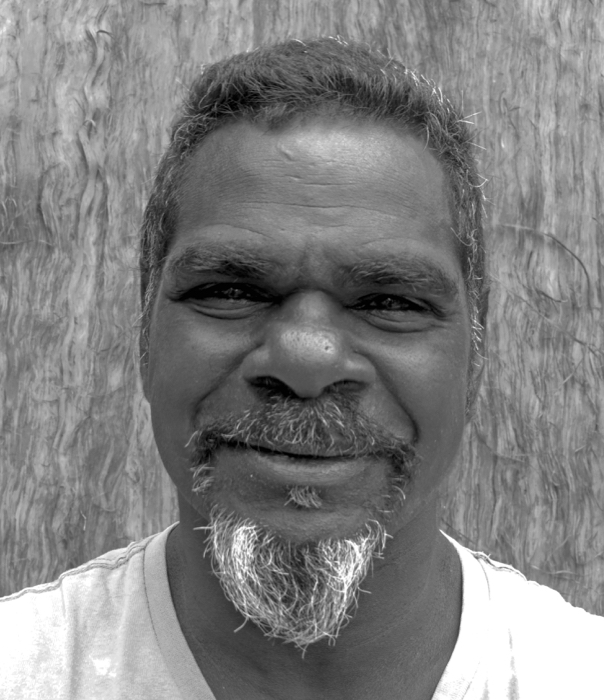
nonu ganambarr
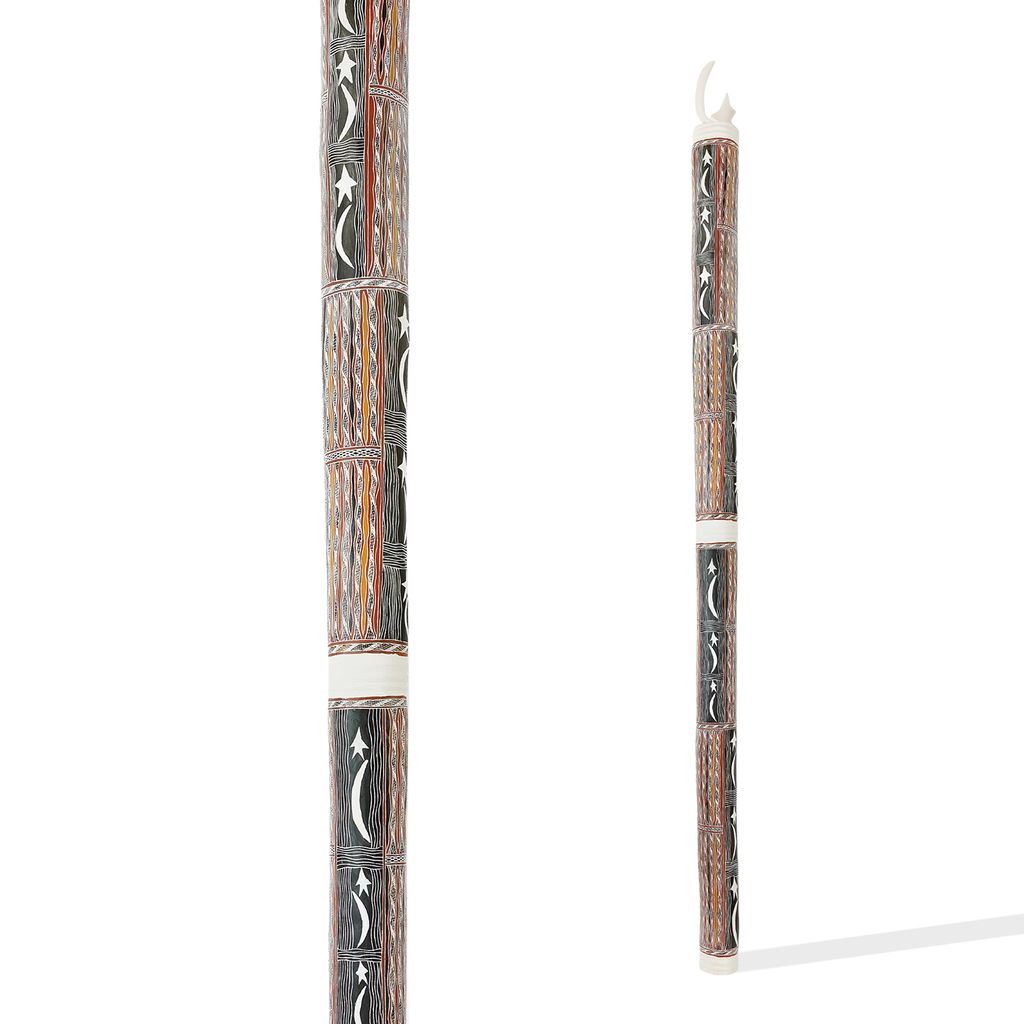
Earth pigments on Stringybark hollow pole
270 cm x 14 cm
Year: 2022
ID: 8869-21
Wirrmu ga Djurrpun
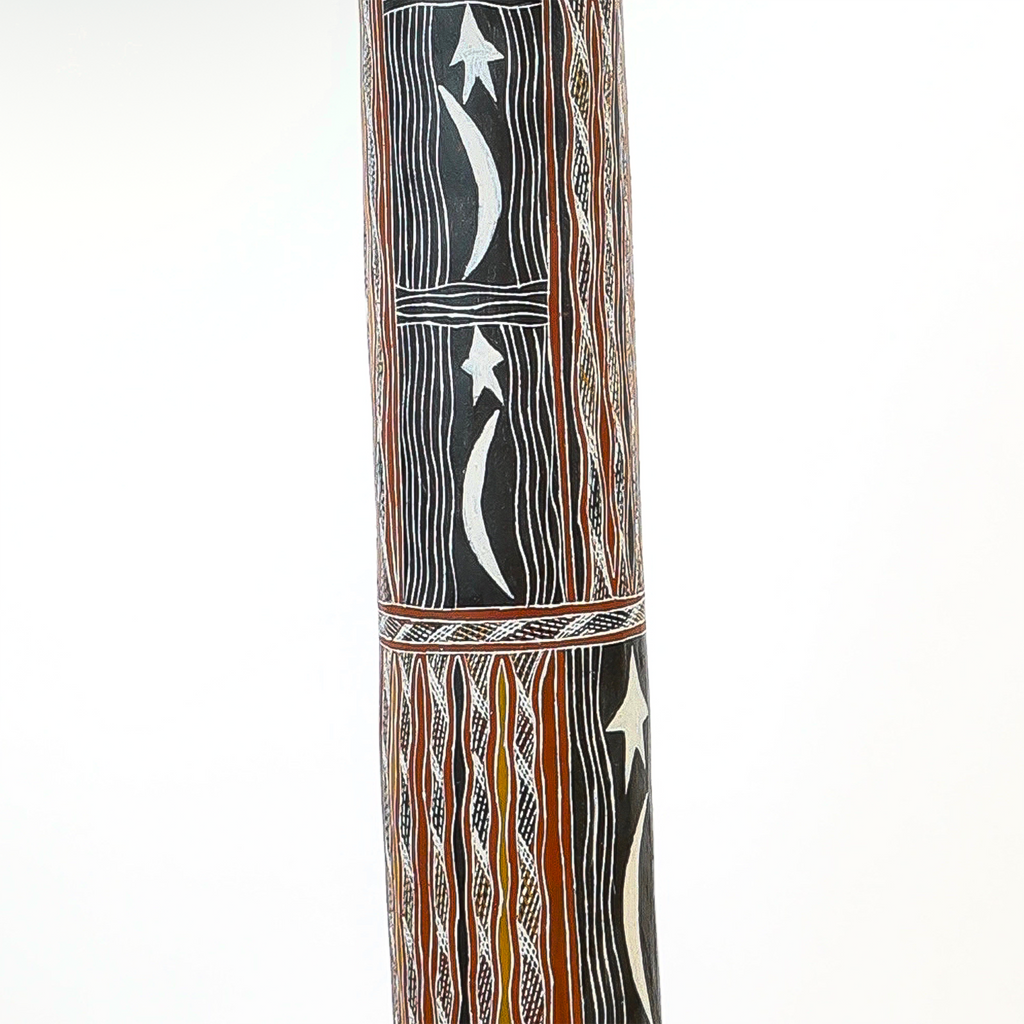
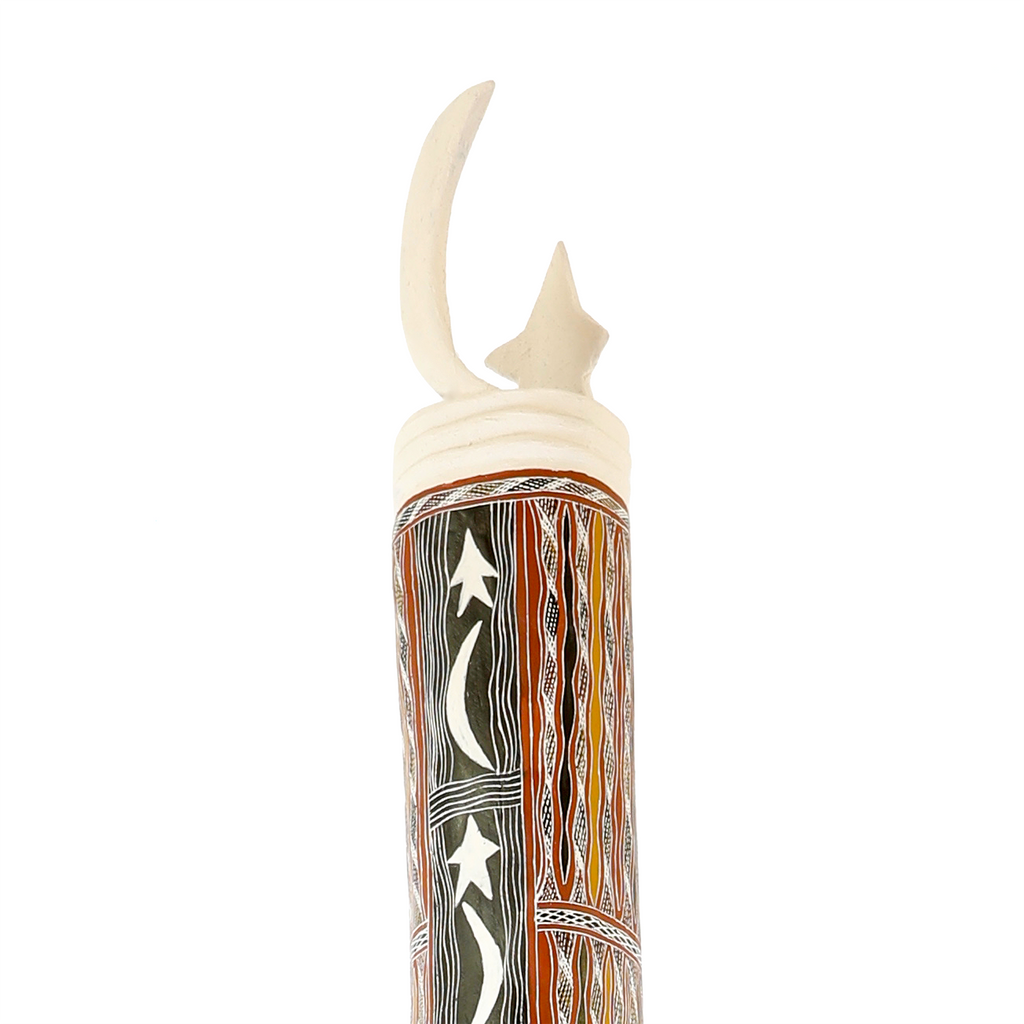
This Waŋgurri clan larrakitj depicts the Wirmul or new moon and Djurrpun the Evening Star and is the amongst the first larrakitj in the modern era to so do. Buwathay said “When the old man was getting sick he drew this in the sand for me and said ’Later paint this one.’” He was referring to his recently deceased father Mathulu’s words. Buwathay went on to say “This is my totem. The little stars are the other stars that you can see. There are songs and dances that go with this story. It relates to the milkarri- the keening of women.” The design on the pole relates to the journey of such a pole through Wangurri clan waters. In saltwaters belonging to that clan from their homeland at Mutamul towards their freshwater homeland at Dhalinybuy. The minyjti or sacred clan design can have different meanings. One is a manifestation in the tracks left in timber from infestation from the boring mangrove worm Milka. Bands of miny’tji represents this and by the layering of hair brush strokes, that build up to a shimmering and brilliant state, itself a manifestation (we can only imagine) of the sublime and to the references this painting could have of the end results of supernatural events and the peace brought after as rays of sun on the calm waters, a condition called gunbilk. Out there in the still distance clouds line the horizon (triangles). The waters that travel through the mangrove areas, (where the Milka infest the wood), that wash with the tides to be taken with the currents out deep to the horizons meet with associate waters from other estates relative to the Wangurri, such as the Maŋgalili. These waters contain the life forces and clan identity and are taken up into the maternal clouds and as dots among the waters supporting the totem octopus Manda and the yothu (child) cuttle fish shells floating on the surface. These worms die as the pole itself a being washes into the freshwater.
The Ḻarrakitj had its traditional use for the Yolŋu of North east Arnhem Land as an ossuary or bone container erected as a memorial to a dead kinsman up to a decade after death. After death the body of the deceased was often ceremonially placed on a raised platform and left to the elements for an appropriate time. The area would then be abandoned until the next stage of the ritual.
This took place once it was determined that the essential eternal spirit of the deceased had completed its cyclical journey to the spring from which it had originated and would in time return again. This might be several years. Whilst the body was ‘lying in state’ others got wind of the death, perhaps by subliminal message and made preparations to journey to the site of mortuary. Usually enough time had elapsed for the bones of the deceased to be naturally cleansed on the platform. The essence of the soul within the bone was made ready for final rites when other outside participants necessary for its safe journey arrived. Ritual saw the bones of the deceased placed within the termite hollowed memorial pole for final resting. Mortuary ritual would end with the placement of the Ḻarrakitj containing the bones standing in the bush. Over time the ḻarrakitj and its contents would return to mother earth.
The ḻarrakitj has often been referred to as the mother’s womb. Once sedentary mission communities were established in Arnhem Land it became impractical to abandon permanent communities and outlawed to expose corpses on platforms. However the cosmology of the Yolŋu and the essence of ritual mortuary ceremony remains just as important. Ḻarrakitj continue to be produced as the equivalent of headstones or to contain the personal effects of a deceased (which might be dangerous unless removed from the living because of the emanations imbued by contact with the deceased).
A further role for this cultural form is as a fine art object and an instructional tool for younger generations. Artworks of this nature have multiple layers of metaphor and meaning which give lessons about the connections between an individual and specific pieces of country (both land and sea), as well as the connections between various clans but also explaining the forces that act upon and within the environment and the mechanics of a spirit’s path through existence. The knowledge referred to by this imagery deepens in complexity and secrecy as a person progresses through a life long learning process.