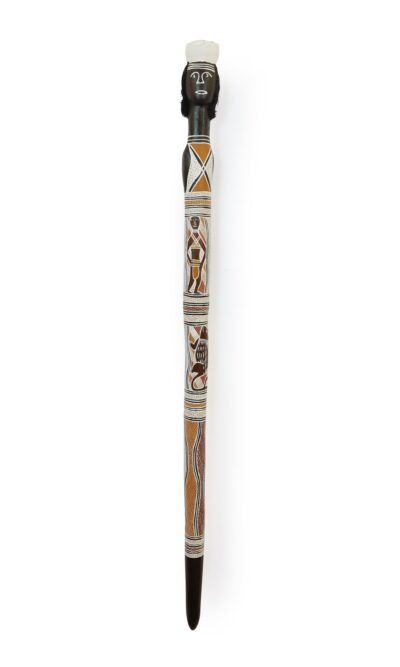
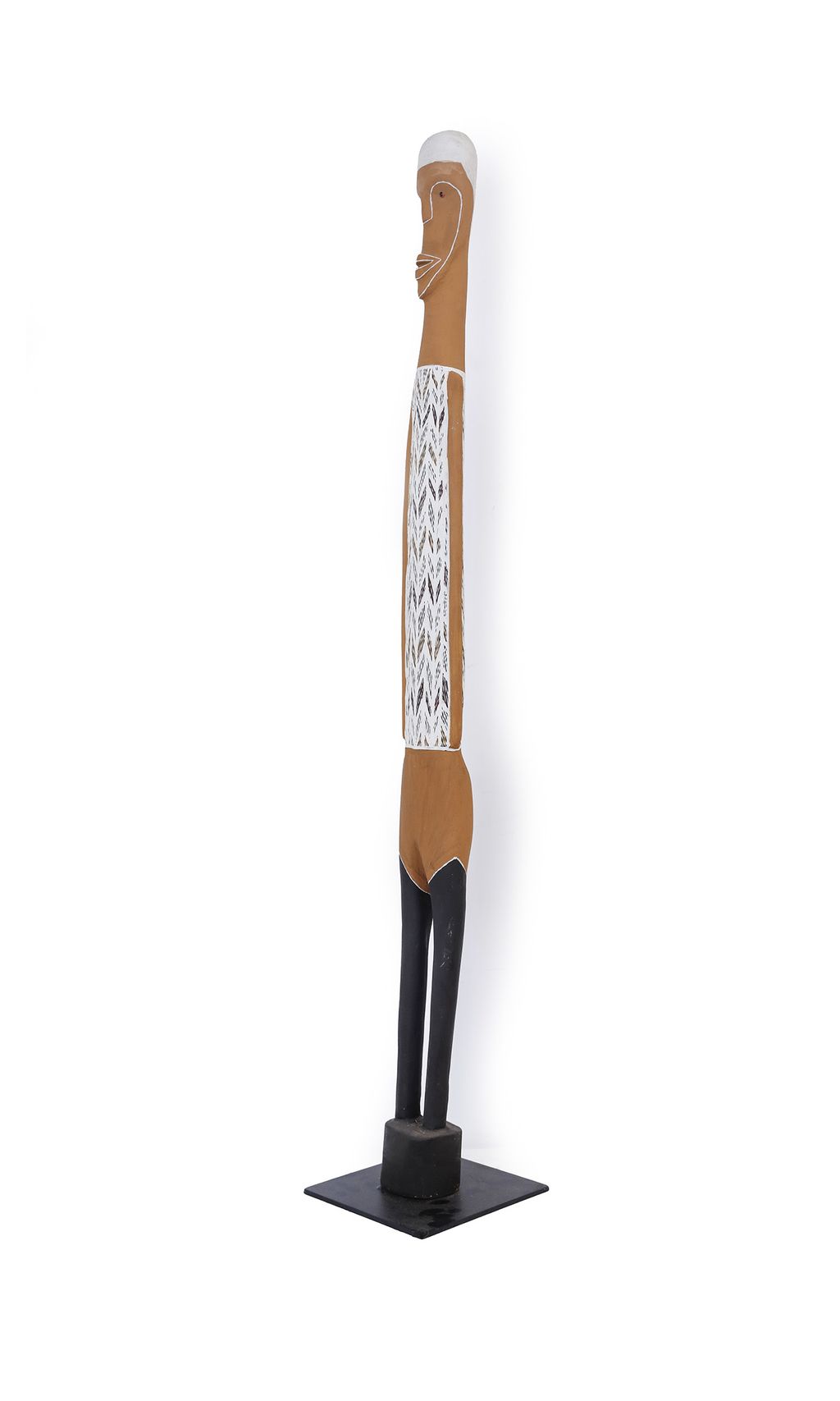
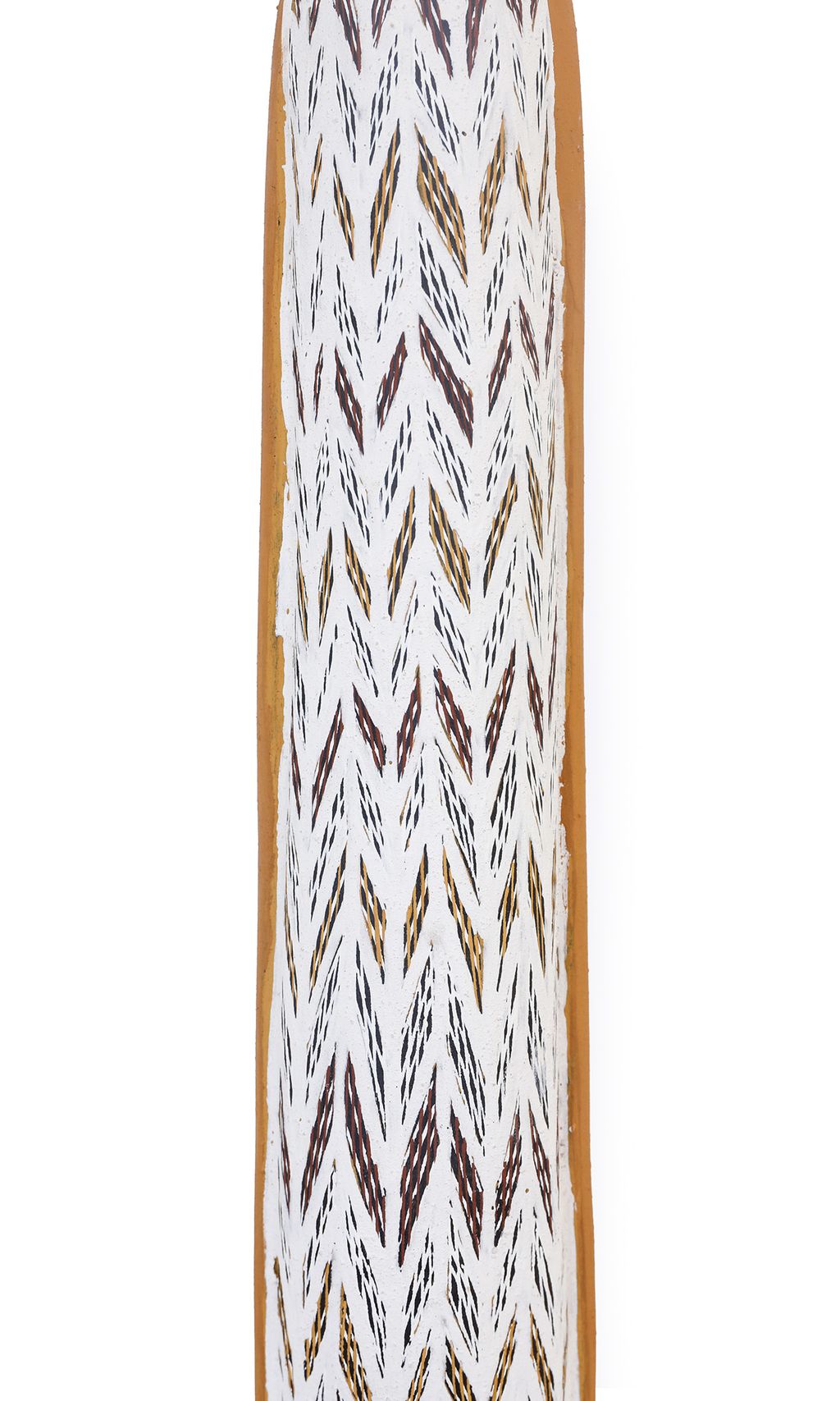
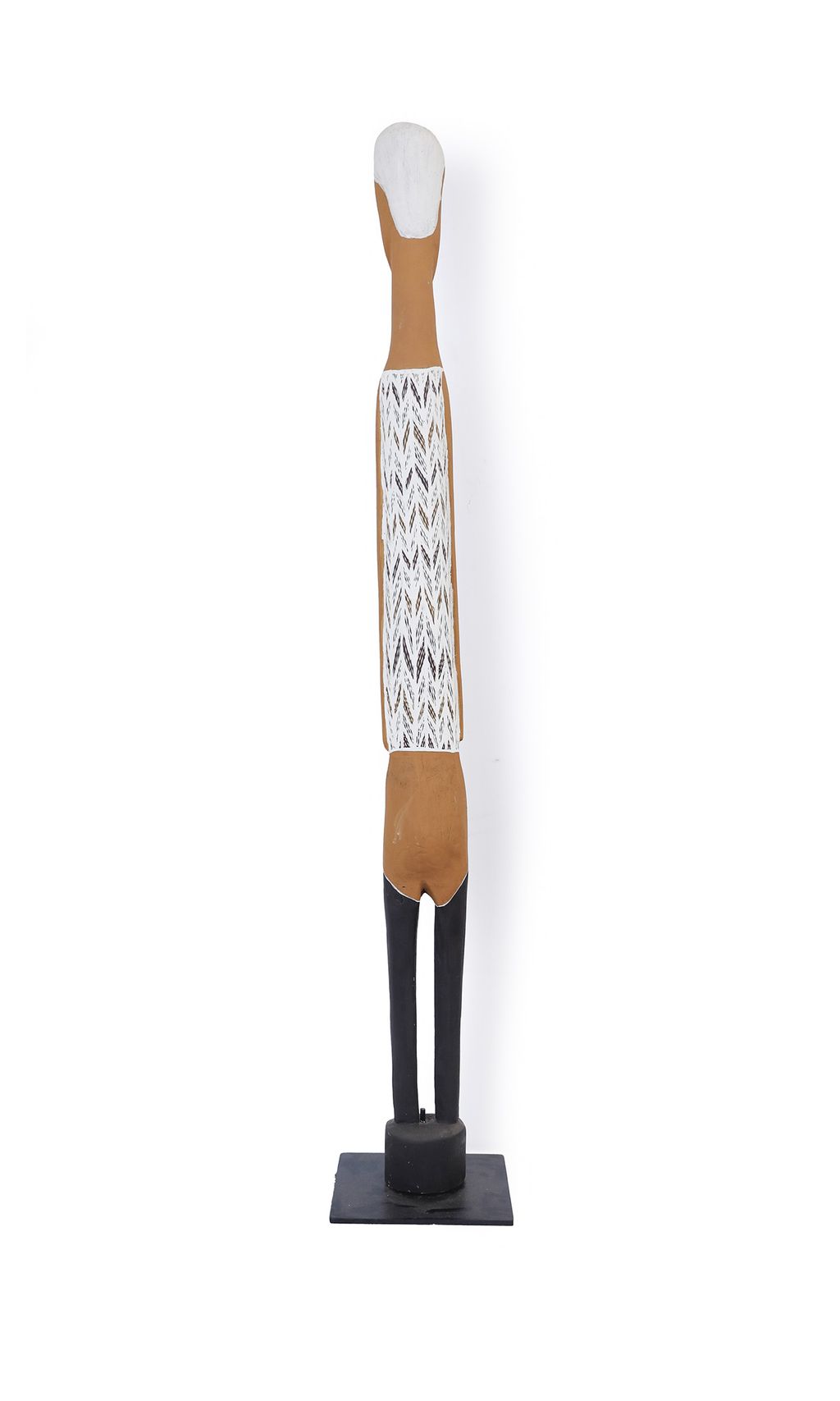
Description
binygurr wirrpanda
Earth pigments on Wood
Year: 2023
ID: 7259-19
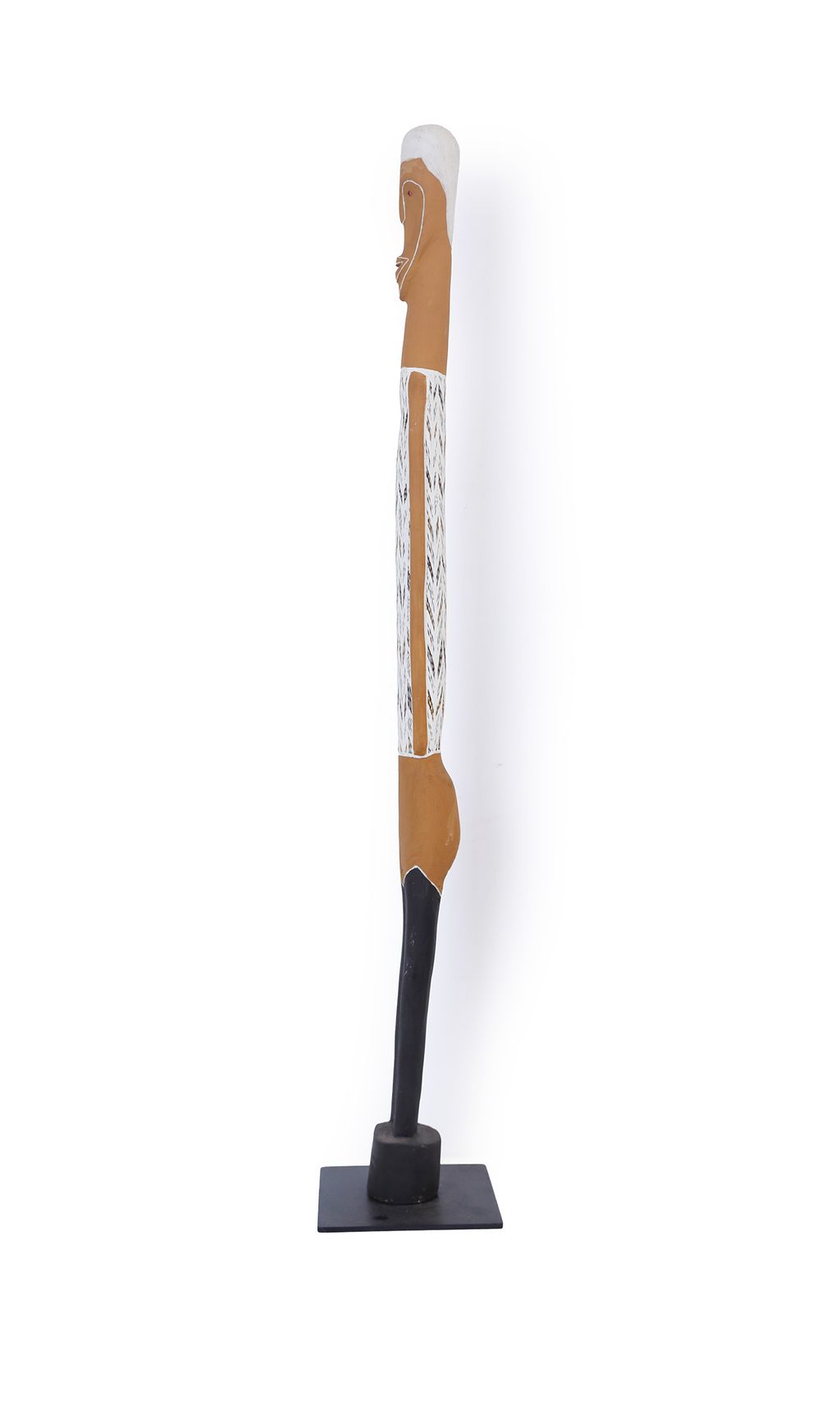
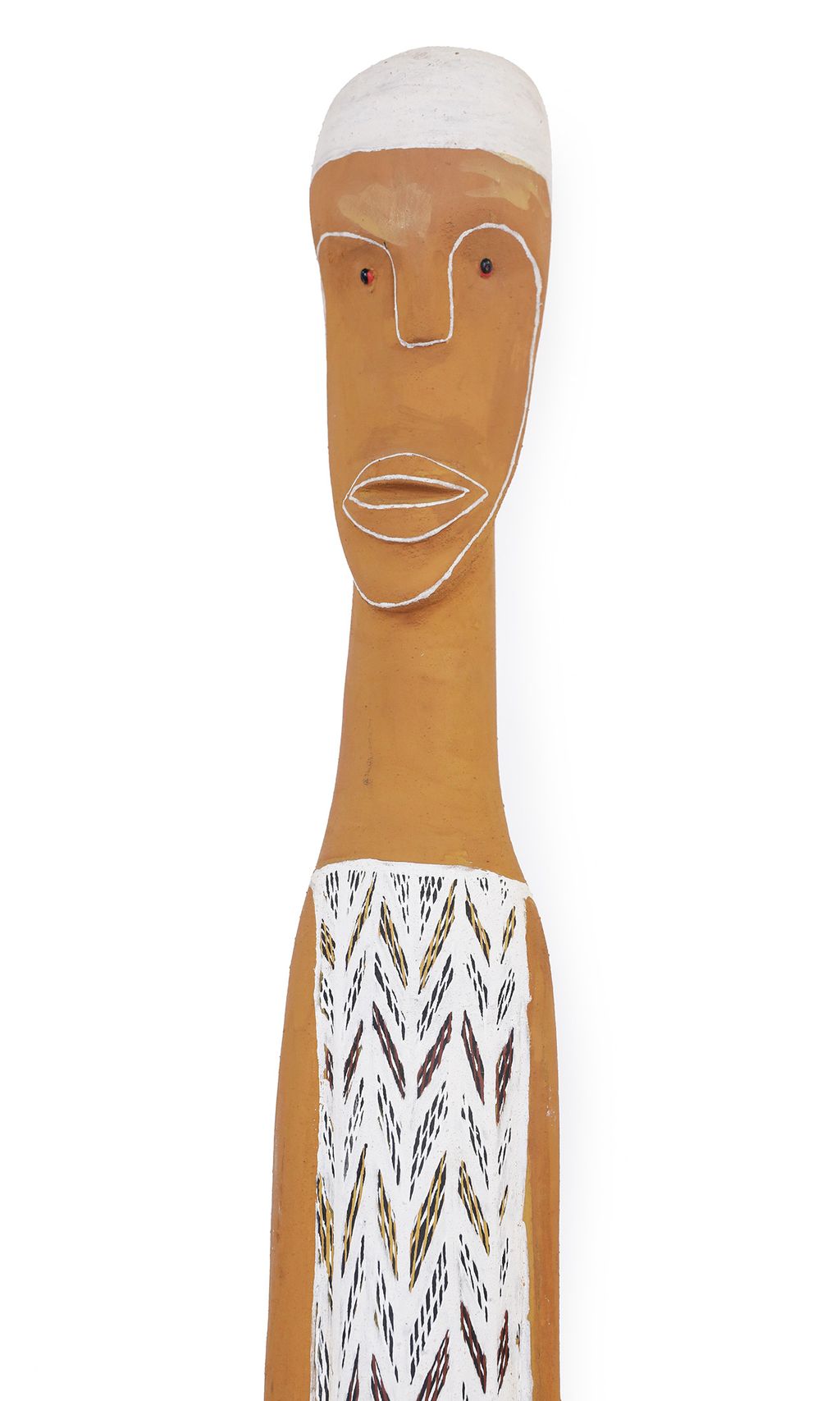
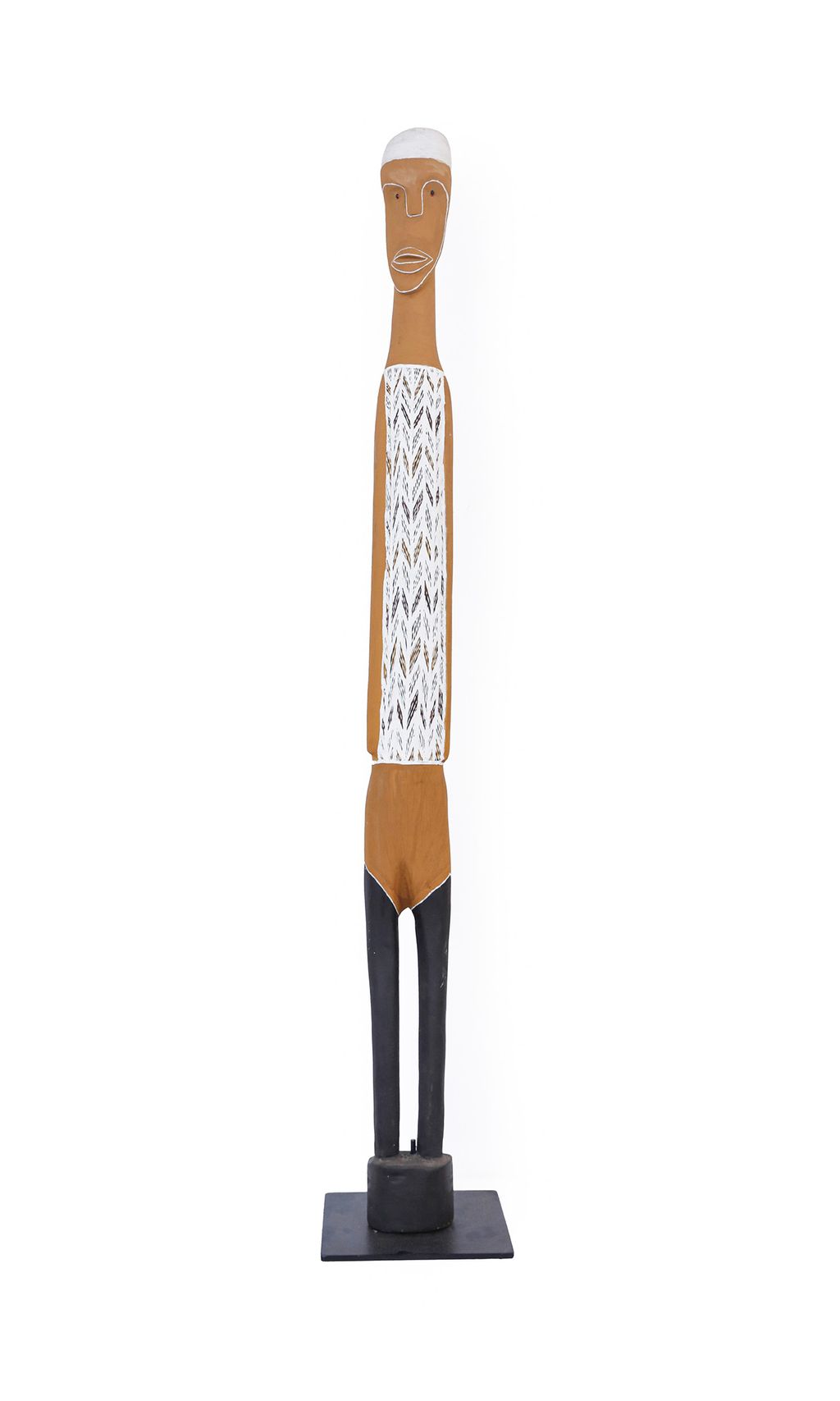
Baḻirrpaḻirr (Dhudi Djapu Mokuy)
*Please note this sculpture is sold without the pictured stand
Mokuy translates as spirit.
The herringbone design on this spirit refers to the Dhudi Djapu clan homeland near Dhuruputjpi. It is based on a water rush endemic to this place called Ḏarraŋgi. The spirit of this place is named Baḻirrpaḻirr. At the old camp starts a massive ground of paperbarks in black mud that floods in the wet. A walk through leads to a large billabong that has been fished since Mäna (ancestral shark) and giant barramundi and saratoga lived there. Looking up the far bank of more black mud and large melaeluca, it eventually swings up. The actions of Ancestral Shark – Gundunuru were swum in these waters. Dharangi, a freshwater palm like leaf stands out of the water bank here hiding the domain of Mäna. In other holes small shark are observed in season. The depiction is Mäna at one of these sacred waters surrounded by these large swamps and billabongs. This also refers to oceanic scenes of an ancestral turtle hunt.
Back out and past the old camp to where a permanent community live, serviced by radio phone and airstrip. This is Dhuruputjpi.
Heading to the coast from Dhuruputjpi the country expands into Yalata, a black soil floodplain to the horizons. Here the dry season residents wait for the surface to harden enough for accessibility to far reaches including Bäniyala. On this flat expanse you see odd clumps of standing vegetation – grasses, pandanus, some with small trees of age interrupting the surface. The Djaŋkawu walked and sung this plain. The Sisters creating with their digging staffs the sacred freshwater wells that feed these ‘odd clumps’ permanent water. Here sacred song has it – the goanna rose from a well to see the first sunrise on Dhangultji (brolga) walking walking Yalata.
If you look back on this plain, towards Garrinyirri you look over sacred country – Walu – where the sun came up.
This work is made from renewable wood which is usually harvested from the tree in the dry season. Preferred woods are Maḻwan (Hibiscus Tiliaceus), Gunhirr (Blind-Your-Eye-Mangrove), Wuḏuku (mangrove wood), Barraṯa (Kapok). The first activity is to enter the monsoon vine thicket and cut the wood and carry it back to the vehicle. Often a long hike through prickly vines and scrub. the wood is skinned and left to dry for a short period. It is then shaped by knife or axe. After the surface is sanded smooth a layer of red paint is usually the first to go down. The paints used are earth pigments. The red (meku), yellow (Gaŋgul) and black (gurrŋan) are provided by rubbing rocks of these colours against a grinding stone and then adding water and PVA glue in small quantities. A new batch of paint is prepared or renewed every few minutes as it dries or is used up. After an outline of the composition is laid down the marwat or crosshatching commences. This is applied using a brush made of a few strands of straight human hair usually from a young woman or girl. The artist charges the marwat (brush) with the paint and then paints away from themselves in a straight line. Each stroke requires a fresh infusion of pigment. The last layer to be applied is almost always the white clay or gapan which is made from kaolin harvested from special sites. This also has water and glue added after being crushed into a fine powder. An alternative to painting the cross hatching is to use a razor to incise fine lines and reveal the light coloured wood underneath.