Description
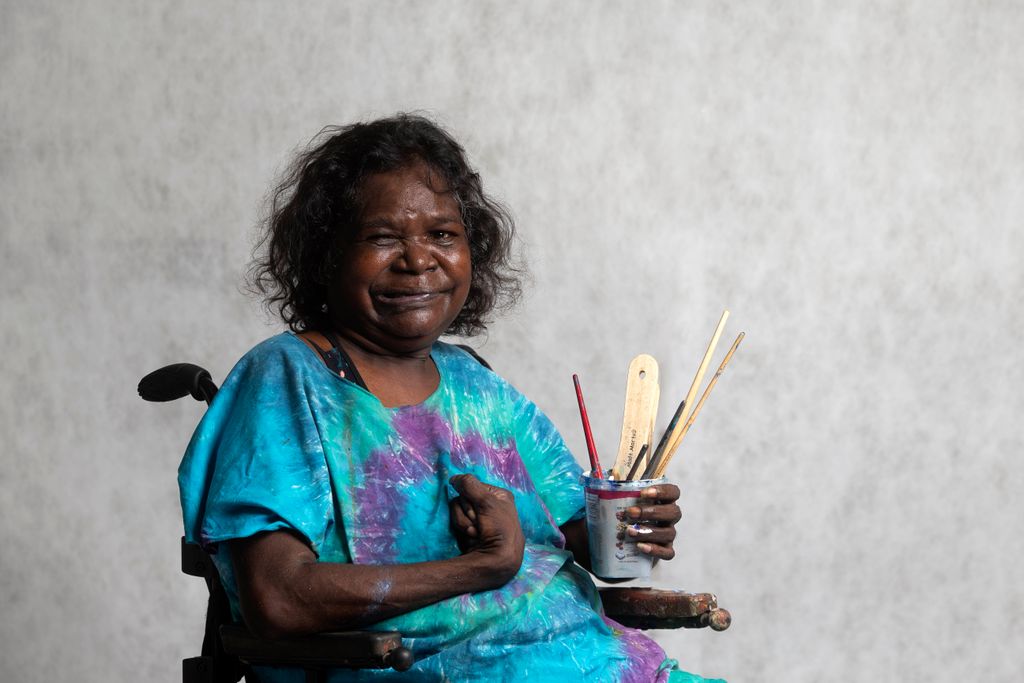
dhambit-ruypu munungurr
Etching and Screenprint
98 x 50cm
Year: 2026
ID: 3961-26
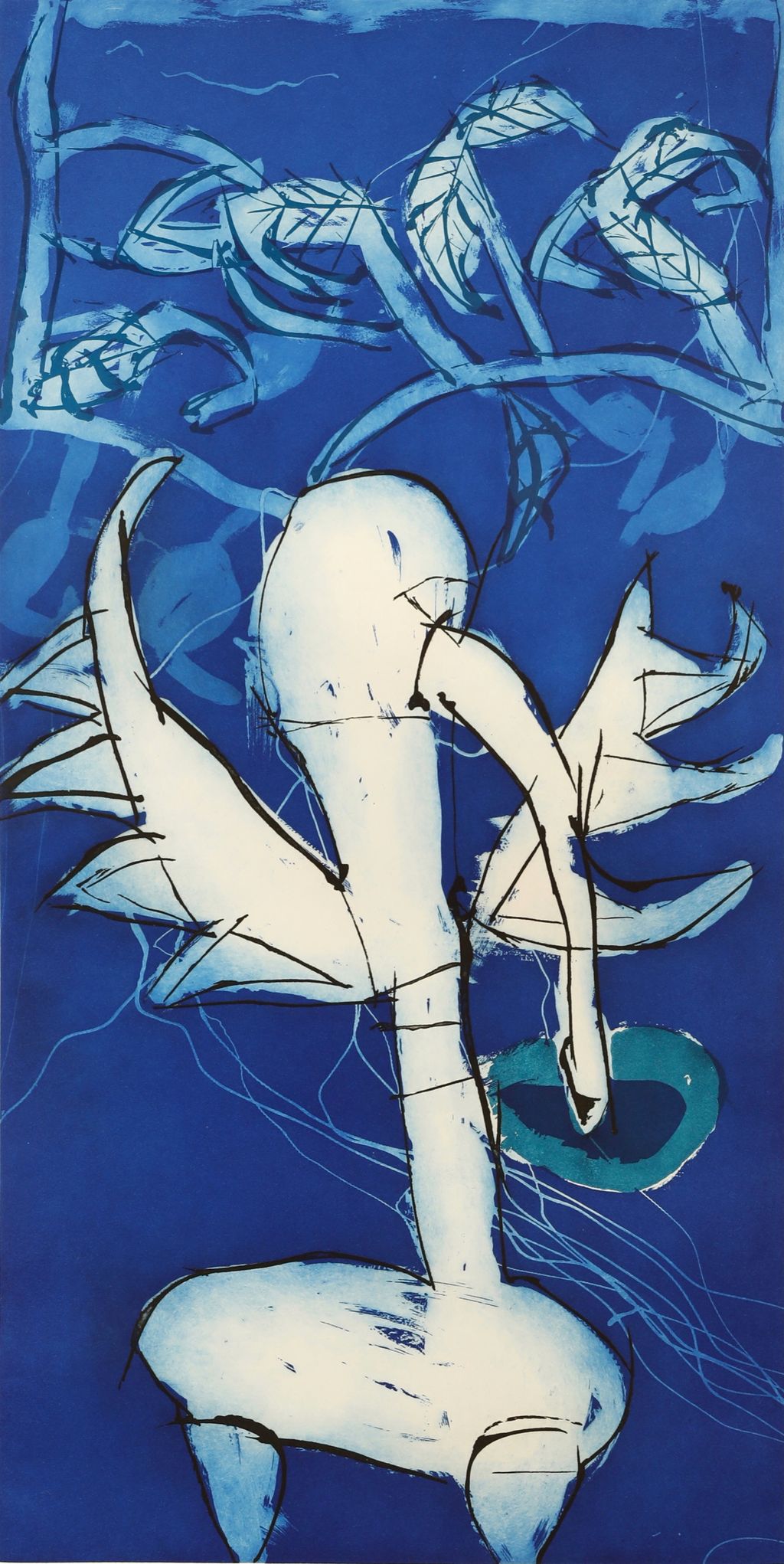
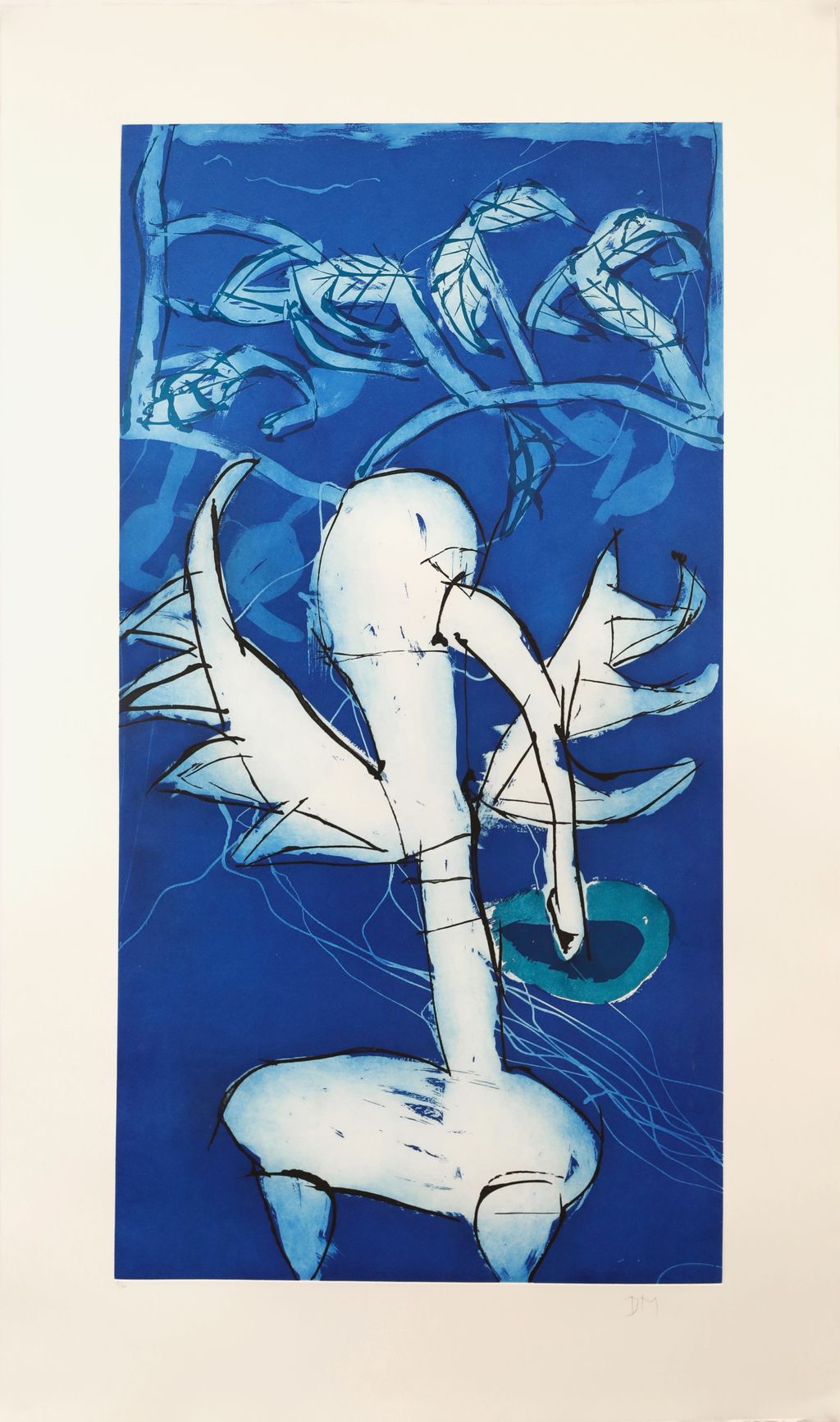
Guḏurrku
Dhambit is the daughter of two famous artists, and winners of the First Prize in the National Aboriginal and Torres strait Islander Art Award, Mutitjpuy Mununggurr and Gulumbu Yunupingu. She was hit by a car in 2007 and suffered serious head injuries which were life threatening, and as a result she uses a wheelchair and has altered movement and speech. Through her husband’s support and her own courage she has used art to overcome the effects of the accident.
Her art is powerful and spontaneous and founded in her deep knowledge of Yolŋu Law. Though contemporary in look, her works speak of her deep understanding of the spiritual forces of her Yolŋu country and worldview and reference her moiety and clan’s songlines.
In this case she says that this print is a depiction of a Guḏurrku (brolga) in the flood plains at Dhuruputjpi known as Garaŋarri. As is often the case when discussing such things with her she revealed an even deeper name of this place which is used rarely – Gawulawala.
Her authority to paint this area stems from the relationship her father has with his mother’s mother’s Dhudi Djapu clan who are the owners of this area. It is a coastal fringe area, this Dhudi Djapu homeland, that has territory leading up a river through plains country behind an area of coast on Blue Mud Bay.
Fresh water springs dot this sun baked plain forming small oases of vegetation and as Rarrandada (the hot time) builds the thirsty birds come to these sacred springs in their thousands. The noise of the guḏurrku or dhaŋgultji (brolgas) is deafening, the mud scored with their tracks and the sky dark with the flocks of wheeling birds.
The Djaŋ’kawu – the Dhuwa moiety creation sisters, manifest as Brolgas, in naming this country for the Dhudi Djapu, created these sacred fresh water springfed waterholes by plunging their sacred digging sticks in the ground. Freshwater sprung from these wells as did a sacred goanna, a manifestation in some circles of the Djaŋ’kawu themselves. The reference to this area is further emphasised by the vegetation which is Ḏarraŋgi- Hanguana malayana- the icon of the billabong area of Dhuruputjpi.
Image size: 98 x 50cm
Paper size: 120 x 69.5cm
Paper: Hahnemuhle